Last updated November 21, 2026
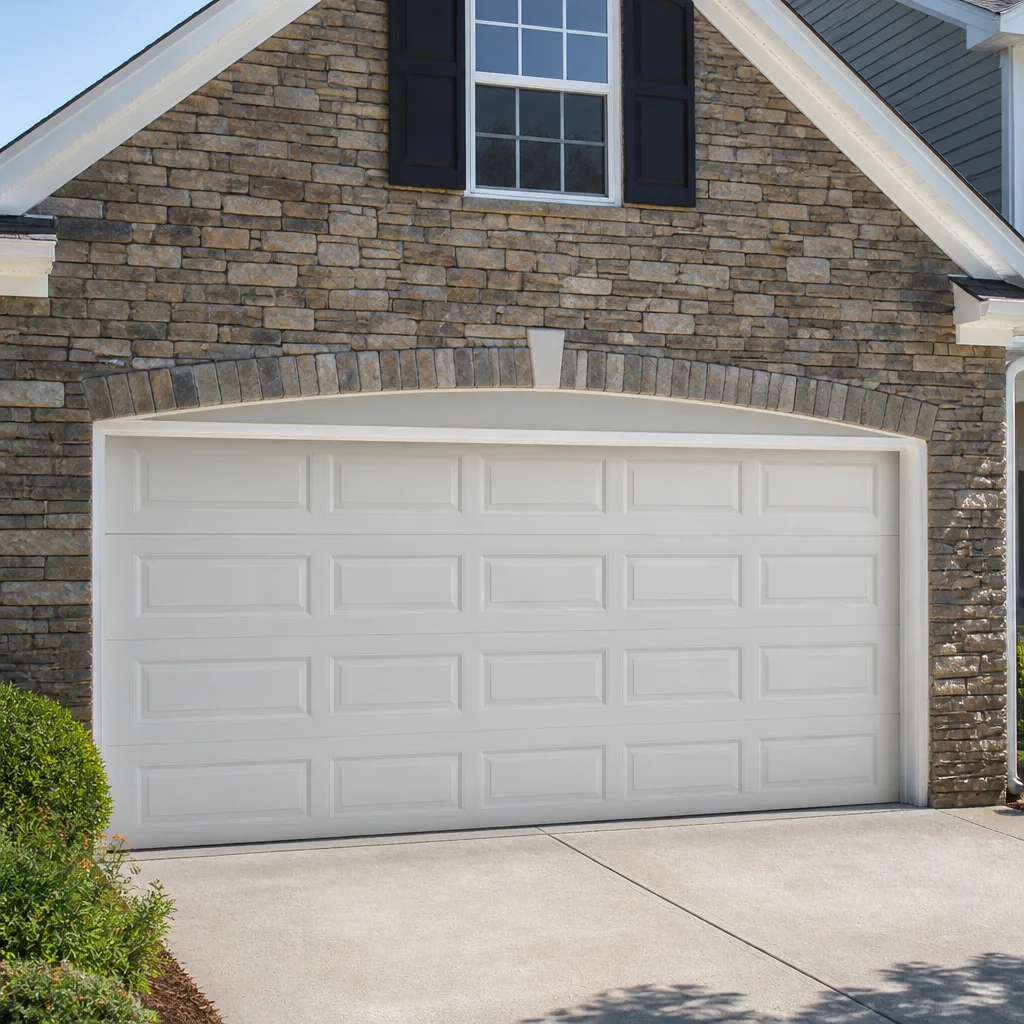 Raised-panel steel
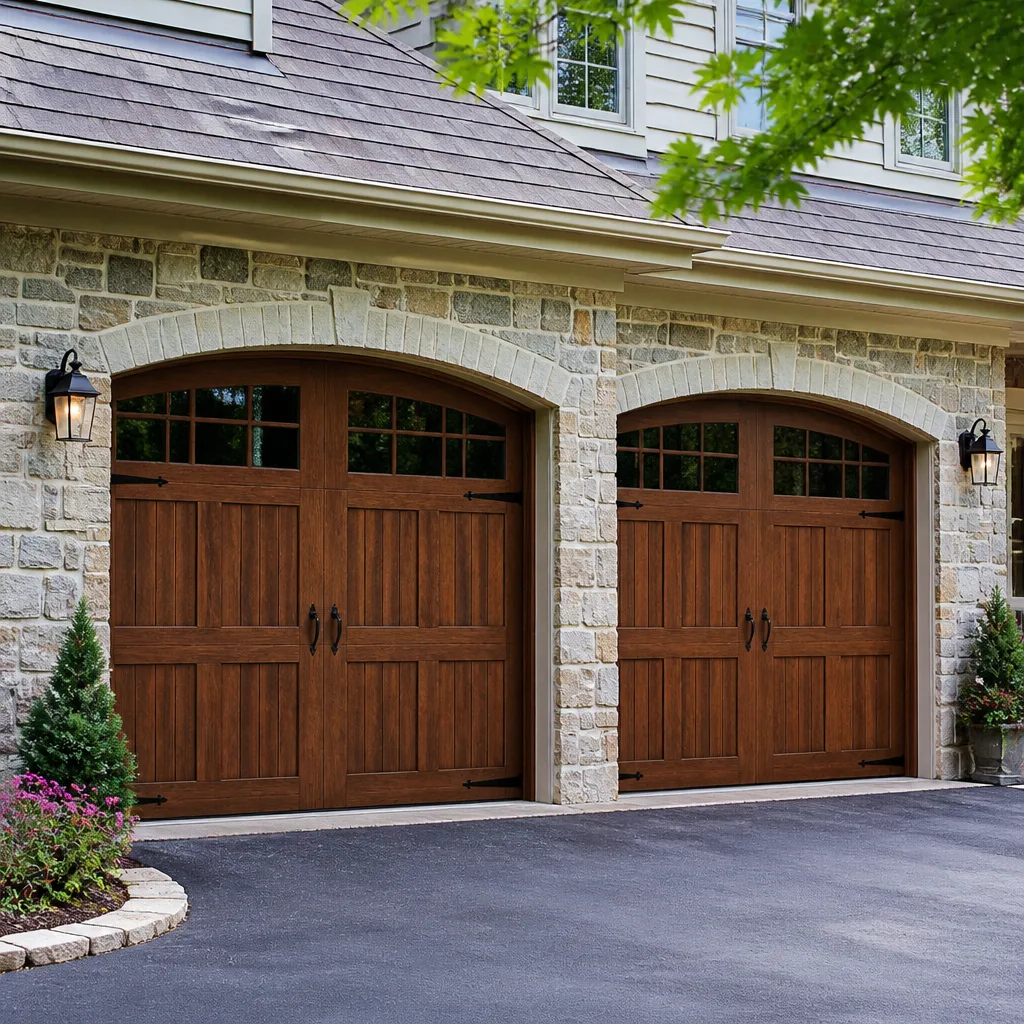 Carriage house
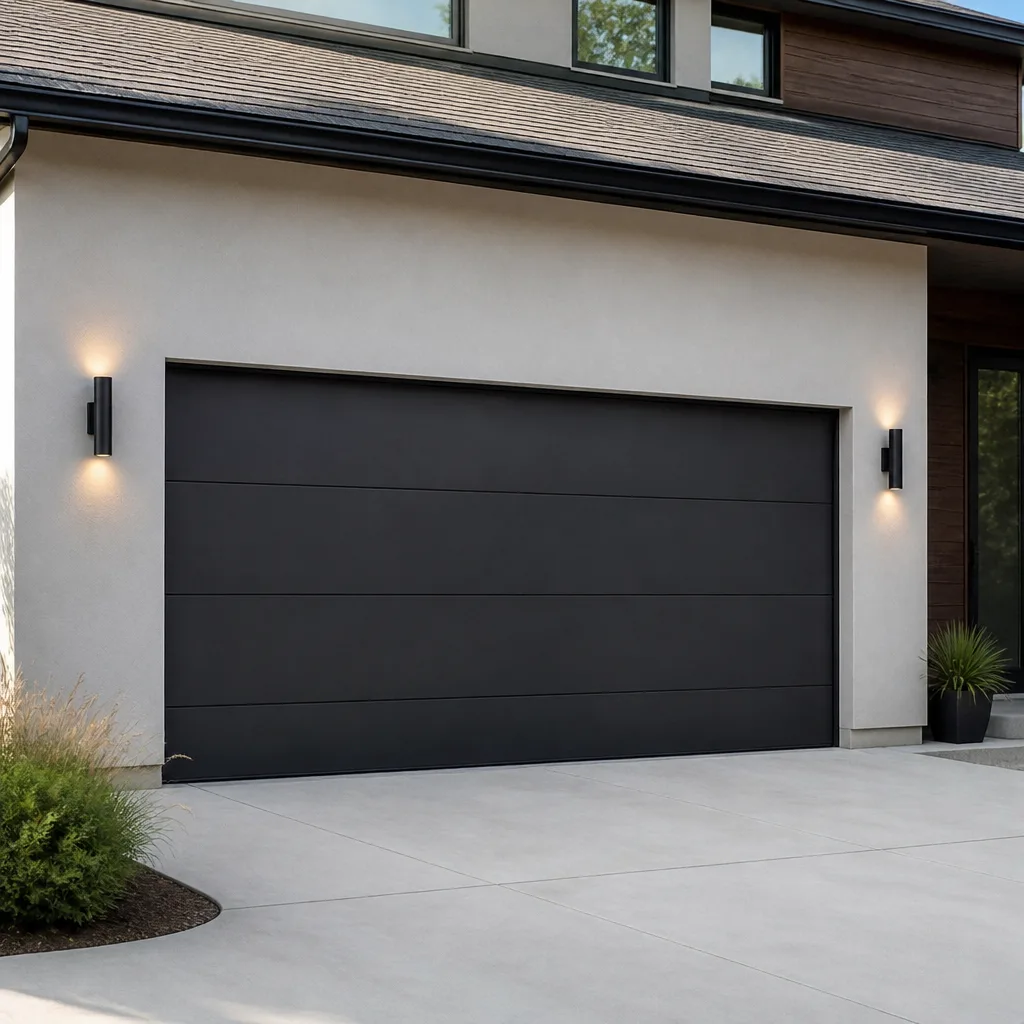 Modern flush
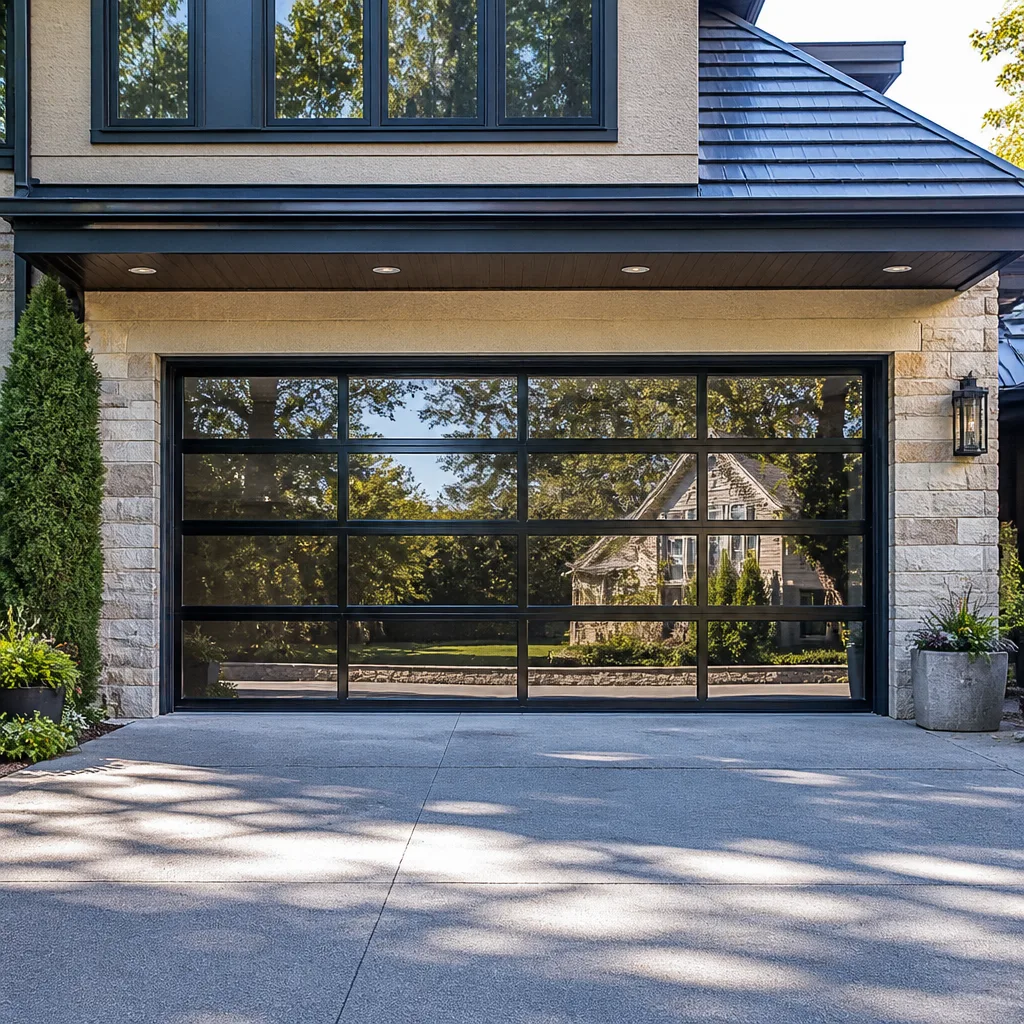 Full-view glass
 LiftMaster openers
 Chamberlain openers
Full 25-point door and opener safety check with every visit - springs, cables, rollers, tracks, and your LiftMaster or Chamberlain opener included
You get a price before we start. It does not change when the pro arrives.
Get your free estimateGarage Door Permits, Codes & Inspections in Providence, RI: What You Need to Know
Most homeowners assume that any work on a garage door is simple, cosmetic, and exempt from the building department’s radar. That assumption is the one that causes the most trouble. Replacing a door in the same opening with the same kind of door usually needs nothing more than the right installer and a written price. But once the work touches structure, electrical, or the size of the opening, Providence’s building department is involved, and the paper trail matters. This guide explains, in plain terms, when Providence requires a permit for garage door and opener work, what an inspector actually looks at, how the permit process works, and why unpermitted work becomes a headache during a home sale. We’ll also cover the Rhode Island rules that govern residential garage doors and automatic openers so you can walk into any conversation with the city prepared.
Quick Answer
In Providence, a straight replacement of a garage door in the same opening, with the same size and type, typically does not require a building permit. New construction of a garage, structural changes to the opening or header, and any new electrical circuit run for a garage door opener generally do require a permit, usually an electrical permit filed separately from a building permit. When in doubt, call Providence’s building department before the job starts and confirm the scope; getting the answer in writing protects you at resale.
Styles & brands we work with
- Raised-panel steel
- Carriage house
- Modern flush
- Full-view glass
- LiftMaster openers
- Chamberlain openers
Table of Contents
- When does Providence require a permit for garage door work?
- Rhode Island code sections that apply to residential garage doors
- What a Providence building inspector actually checks
- How unpermitted work shows up at resale and in insurance claims
- Pulling the permit yourself vs. having it pulled for you
- Openers and electrical: the part most homeowners overlook
- Neighborhood context: older housing stock and newer builds
- Questions to ask any garage door contractor before work begins
When does Providence require a permit for garage door work?
The short version: routine replacement doesn’t need a permit; anything that changes the structure, the dimensions, or the electrical supply usually does. Providence’s building office follows statewide rules and evaluates permits based on what the job actually involves, not on how it’s described on a website. Here’s how it breaks down for the most common garage door projects.
- Same-size door replacement: Typically no building permit. If the door size, type (sectional, roll-up, carriage-style), and track layout stay the same and no framing changes, this is treated as a replacement of a component.
- New garage construction or an addition: Requires a building permit. The garage, the door opening, and the electrical work are all part of the permitted scope.
- Enlarging or changing the opening: Requires a building permit because it involves cutting or modifying the header and framing. The header carries load, and the inspector will want to see the structural work.
- New electrical work for an opener: Usually requires an electrical permit. If there’s an existing outlet above the door, swapping an opener is typically not permitted work. Running new wire, adding a circuit, or adding a dedicated outlet is.
- Commercial-style roll-up doors installed on a residence: Often reviewed under the building permit process when the track system and door assembly are not typical residential components.
For anything not on this list, the right move is to call the Providence building department directly, describe the scope in plain language, and ask what the office wants to see. The clerk will tell you whether it’s a building permit, an electrical permit, both, or neither. Write down the answer, the name of the clerk, and the date. That note has value years later.
If you’re not sure what your job involves yet, an on-site assessment is the fastest way to find out. We can walk your opening, look at the existing track and hardware, and tell you whether the work touches structure or electrical. That determines the permit question before anyone starts.
Rhode Island code sections that apply to residential garage doors
Rhode Island adopts the International Residential Code for one- and two-family homes, with state amendments, and Providence enforces it locally. You don’t need to memorize section numbers, but knowing which code chapters govern your project helps you ask the right questions and understand what the inspector is looking for.
- Structural chapter: Governs garage framing, headers, and how openings are spanned. Relevant when you change the size of the opening.
- Means of egress: If the garage is attached, the door between the garage and the living space has to meet fire separation and self-closing requirements. A garage door opening to the outside is not the egress door, but attached garages are subject to these rules.
- Electrical chapter: Applies to any circuit serving an automatic garage door opener, including the disconnecting means and the requirements for a listed appliance. Garage outlet requirements, GFCI protection, and garage lighting are all in this chapter.
- Energy chapter: Applies when a garage door separates conditioned space from an unconditioned garage or the outdoors. Insulation values are set here and referenced on the door’s label.
- Automatic garage door opener safety: The IRC references the UL 325 standard for residential openers, which requires two safety features: an entrapment protection device (usually the photoelectric eye at the floor) and a secondary reversal function that responds to contact. Inspectors check that both are in place and functioning.
We’re not attorneys and this isn’t legal advice. If your project involves a nuance like a zero-lot-line property, an historic district overlay, or a garage that shares a wall with a neighbor, confirm the code requirements with the Providence building department and, if needed, a Rhode Island-licensed architect or engineer.
Providence properties near Benefit Street and the East Side frequently sit in historic overlay districts, which add another review layer. The Providence Historic District Commission has jurisdiction over visible exterior changes in designated districts, and garage door replacement sometimes falls under that review. Confirm with the commission before ordering a door.
What a Providence building inspector actually checks
When a garage door job does require an inspection, the inspector isn’t just looking at the door. They’re confirming the structural, electrical, and safety components match what the permit describes. Here’s what we’ve seen inspectors spend time on during a residential garage door inspection in Providence.
- Header and framing: If the permit covered structural changes, the inspector verifies the header size, fasteners, and blocking. Rough framing is often inspected before the door goes up, then the finished assembly is confirmed at final.
- Door attachment and operation: The door has to be attached per the manufacturer’s instructions, with the right number of hinges, rollers, and brackets. The door has to open and close smoothly and fully.
- Safety reversal: The photoelectric safety eyes must be aligned, wired, and functioning. The inspector typically tests by blocking the beam and confirming the door reverses.
- Contact reversal: The secondary entrapment protection must respond to physical contact. The inspector may push or hold the door’s edge during closing.
- Electrical connections: If the opener circuit was part of the permit, the inspector confirms the disconnect, the outlet, and that the opener is a listed device installed per its instructions.
- Fire separation (attached garages): Where the garage attaches to living space, the wall and door between them has to meet the required fire rating, and the door has to self-close.
What the inspector usually does not check: spring tension, cable condition, or cosmetic finish on the door. Those are maintenance items and fall to the homeowner and the service company, which is why we always flag spring and cable condition even when a final inspection passes.
If an inspector fails an item, you get a written correction notice. Normally you correct the item and schedule a re-inspection. If the correction is a structural issue, the door may need to come down and go back up, which is why the plan review step matters.
How unpermitted work shows up at resale and in insurance claims
Unpermitted garage door work rarely causes a problem on the day it’s done. It surfaces later, at the exact moment when you need everything to be clean: the home sale and the insurance claim. Both are the wrong time to learn that a permit was skipped.
At resale, most residential purchase contracts in Providence give the buyer the right to inspect and the right to ask for documentation of permitted work. When the buyer’s inspector flags a garage door installation that clearly involved new electrical work, the seller is often asked to either produce the permit and inspection record or correct the situation. Correcting an unpermitted job after the fact usually means opening up or redoing some of the work so the inspector can see it, which is significantly more expensive and more disruptive than doing it right the first time. It can also delay the closing, and in a competitive market even a short delay costs money.
With insurance, the calculation is different but the risk is real. Homeowner policies generally cover damage from sudden events, and an insurer can decline or reduce a claim if the damage was caused by non-code-compliant workmanship that was never permitted. An opener that was wired to the wrong circuit or mounted without the required safety features can become the reason a claim is denied. That doesn’t mean every garage door opener needs a permit; it means that if the permit was required and skipped, the coverage question gets harder to answer.
Ask any Providence real estate attorney how often garage door opener documentation comes up at closing, and you’ll get an eye roll. It comes up. The simplest way to avoid it is to make sure the paperwork was done at the time of the work.
Pulling the permit yourself vs. having it pulled for you
In Rhode Island, a homeowner can usually pull a permit on their own residence for work they will do themselves. That’s a benefit, and sometimes a trap. The permit holder assumes the responsibility for the work, the inspections, and the code compliance. When a licensed contractor pulls the permit, the burden shifts to them.
Here’s how the two paths compare for garage door work in Providence:
- You pull the permit: You fill out the application, pay the fees, schedule inspections, and are responsible for compliance. You must be the one doing (or directly supervising) the work in most cases. If an inspector finds a problem, the correction notice is addressed to you.
- The contractor pulls the permit: The licensed professional files the application, carries the responsibility for code compliance, and coordinates inspections. The permit is typically issued to the contractor, so any correction notice comes to them, not to you. That’s the arrangement that protects the homeowner.
- Liability in either case: If a defect later causes damage and the permit wasn’t pulled, the homeowner is exposed. If the permit was pulled but the work was defective, the contractor’s licensing and insurance come into play. Ask for proof of both before the work begins.
Our advice: if a project requires a permit, have the professional pull it. That’s what insurance and licensing are for, and it removes you from the middle of an inspector’s punch list. If the company you’re talking to suggests skipping the permit because “it’s just a door,” that’s your cue to get another quote. When we connect you with a vetted local professional on a permitted job, the pro pulls the permit and stays on the job through the final inspection.
Openers and electrical: the part most homeowners overlook
The most common unpermitted garage door job in Providence isn’t a door replacement at all. It’s an opener installation that involved new electrical work. Homeowners hear “opener swap” and picture unplugging one box and plugging in another. What actually happens depends entirely on what’s already there.
If a garage has a dedicated outlet in the ceiling above the door, and the existing opener is plugged into it, swapping in a new opener is usually a straightforward replacement. If the garage doesn’t have an outlet in the ceiling, the job grows. Running a new circuit, adding a junction box, or extending a circuit from another part of the house is electrical work. In Providence, that work falls under the electrical permit process and requires inspection.
Openers from LiftMaster, Chamberlain, Genie, and Craftsman have gotten smarter over the last decade. Many now connect to Wi-Fi, use battery backup, and include integrated cameras or myQ-style compatibility. That’s a genuine benefit, but it also means more wiring connections in the ceiling and more potential points of failure. When we assess an opener replacement in Providence, we look at four things:
- Whether there’s an existing dedicated outlet within reach of the opener’s power cord.
- Whether the existing circuit can handle the new unit’s draw without tripping.
- Whether the new opener’s safety eyes can be wired to the current wall or ceiling configuration.
- Whether the door itself can safely support an opener with the existing spring setup, or whether the springs need attention first.
If the answer to the first question is yes and the rest are clean, the swap is usually a simple repair job. If the answer is no, the job needs an electrician’s permit before the opener goes in. Either way, the price is quoted and agreed before work starts, and the final scope is written on the estimate so you know exactly what’s covered.
Our technicians have up to 10 years of experience with openers from the major smart-home brands, and we’ve seen legacy openers repurposed onto new circuits where the old setup was never quite right. If you’re unsure what you have, garage door opener repair starts with a diagnostic that tells you whether the issue is the opener, the circuit, or the door.
Neighborhood context: older housing stock and newer builds
Whether you’ll run into a permit question in Providence depends partly on where you live. The city has two very different garage door realities, and they behave differently through the permit process.
In older neighborhoods like Federal Hill, Fox Point, and the East Side, garages were built long before the current building code. Headers are often undersized by modern standards, electrical may be knob-and-tube or ungrounded, and the garage door may have been replaced more than once without documentation. When a job in one of these neighborhoods touches the opening or the electrical, we spend more time on the pre-work assessment, because surprises are common in walls and ceilings.
In newer construction on the city’s outskirts and in nearby communities like North Providence, Cranston, and East Providence, the permitting baseline is usually cleaner. The original garage door installation was probably permitted when the house was built, and the electrical is up to current code. That makes a straight replacement easier, though the door’s weight and balance still matter, especially with insulated doors from Clopay or Amarr.
Providence’s climate adds another wrinkle. Snow loads, freeze-thaw cycles, and the thaw that follows a hard winter all stress garage door hardware. Springs fatigue faster when a door is opened and closed in cold weather, and a door that struggled through the winter is often the one that fails in April. Repairs after a failure are one category; installs and structural changes are another. Repairs can usually be scheduled fast, while installation work is measured, ordered, and scheduled around the delivery of the door. If you need a door repaired right away, our garage door repair service is designed to be responsive, not a callback promise.
If you’re considering a full replacement, the assessment is a separate visit. garage door installation starts with a measurement, a brand and style discussion, and a written quote. There’s no rush on that side of the work, and the permit question is usually easier to resolve before the door is ordered.
Questions to ask any garage door contractor before work begins
The right questions at the quote stage save you from the wrong answers at closing. Whether you’re working with us or anyone else, ask these before the work starts.
- Is a permit required for this scope? The contractor should be able to answer clearly, tell you which permit (building, electrical, or both), and explain why.
- Who pulls the permit? Ideally the professional performing the work. If the answer is “you can pull it,” ask why they’re not.
- Is the final inspection included in the price? A good quote accounts for it. If it doesn’t, you’re going to get a surprise bill later.
- Do you carry insurance for this type of work? Ask for proof. Any reputable professional will provide it.
- What brand and model door and hardware are in the quote? You want specifics, not a generic line item.
- What happens if the inspector fails something? Ask who covers the correction and re-inspection cost.
- Is the final price the written price? It should be, barring structural surprises documented before work begins.
The answers tell you a lot. A contractor who flinches at question one or two is telling you more than a positive review ever could.
Common Mistakes to Avoid
- Skipping the permit because the door “looks the same.” Appearance isn’t the test. Structural and electrical scope is. Ask the Providence building department to confirm, not the salesman.
- Pulling the permit as a homeowner for work a contractor will do. In most cases you’re not qualified to supervise licensed work, and the correction notice lands on you instead of the professional.
- Assuming an opener swap never needs an electrical permit. If new wiring is involved, it does. The permit is cheap; the correction is not.
- Not documenting the work for resale. Keep the permit, the inspection approval, and the invoice. In a Providence home sale, these are the documents a buyer’s attorney will ask for.
- Overlooking historic district review. Properties in designated Providence historic districts may need commission approval for exterior door changes, separate from the building permit.
- Ignoring the safety reversal test after a door is installed. Both the photoelectric eye and the contact reversal function have to work. Test them once a month, and again anytime the door is adjusted.
- Replacing a door when a repair would do. A misaligned track, a worn roller, or a failing opener isn’t a reason to replace the whole door. Get a diagnostic before agreeing to a replacement.
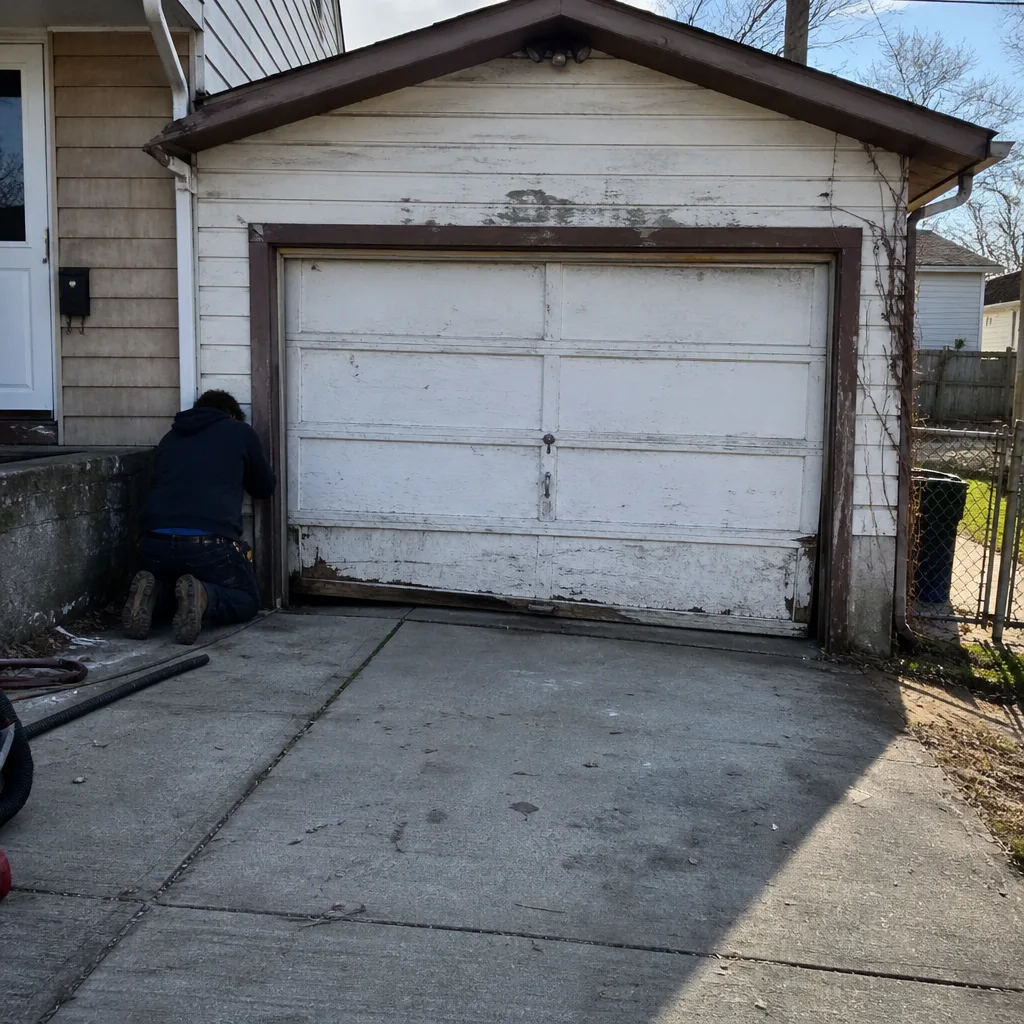
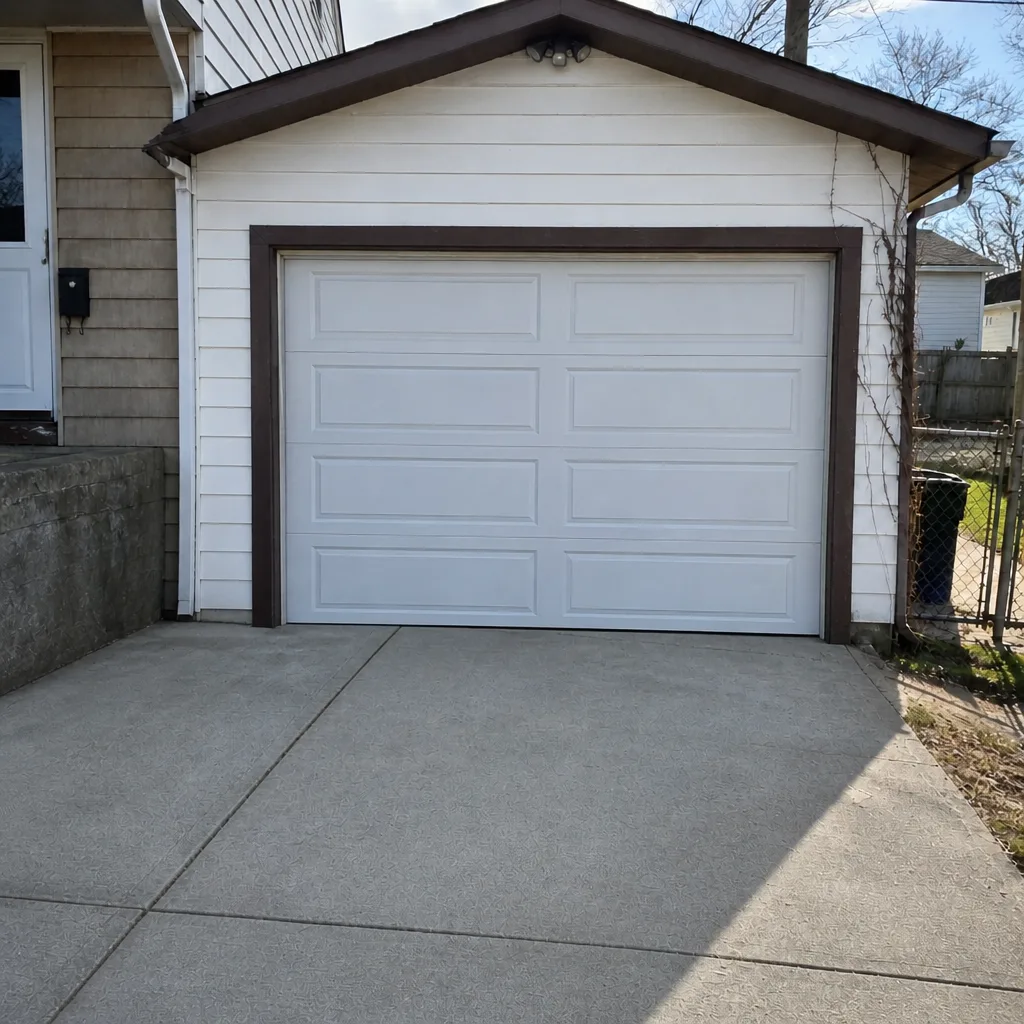
See the difference
 Before
 After
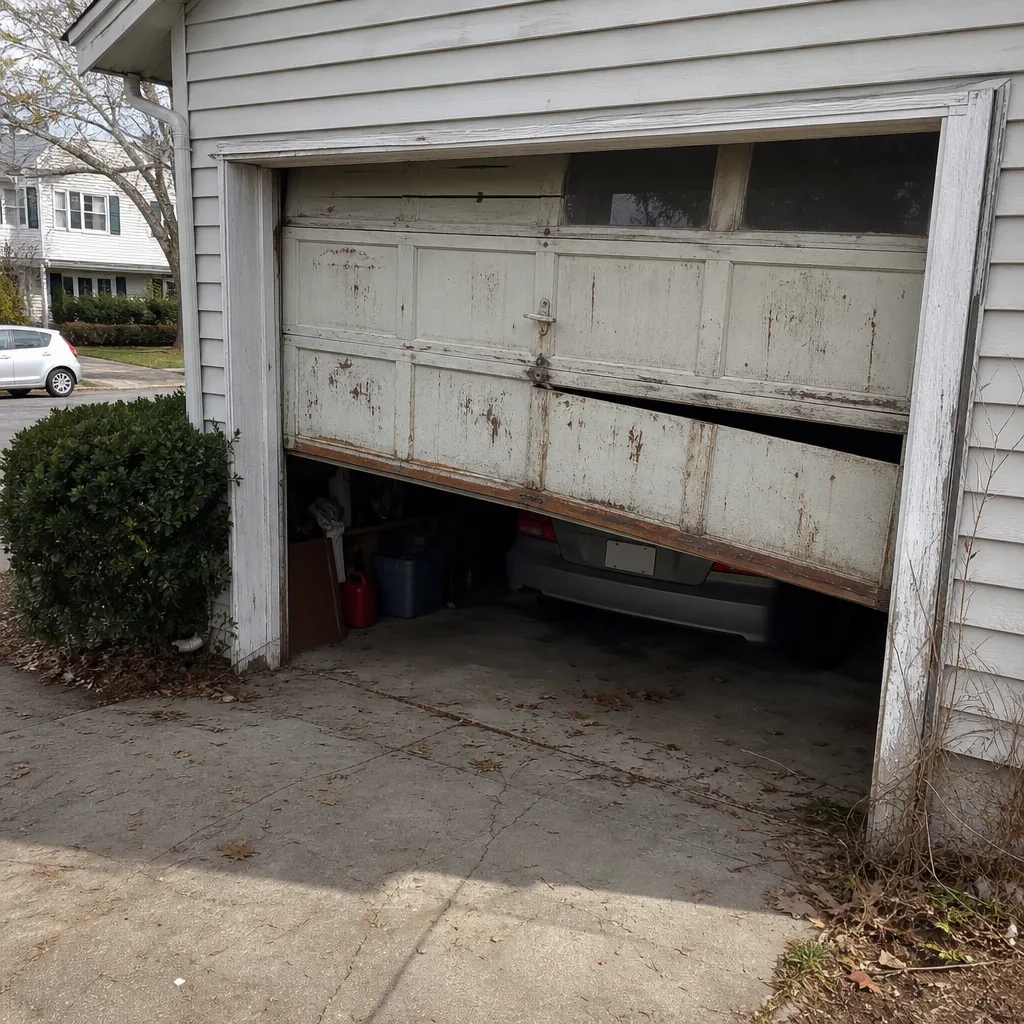 Before
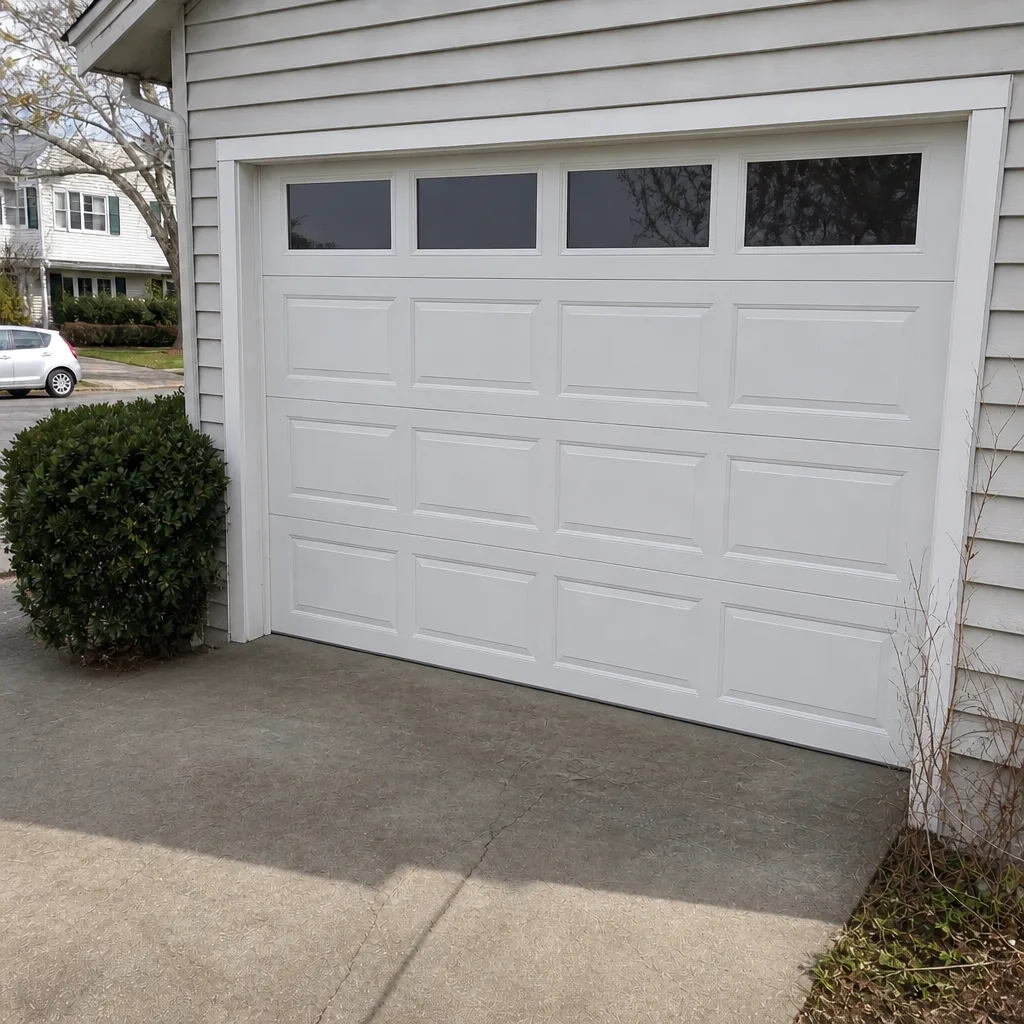 After
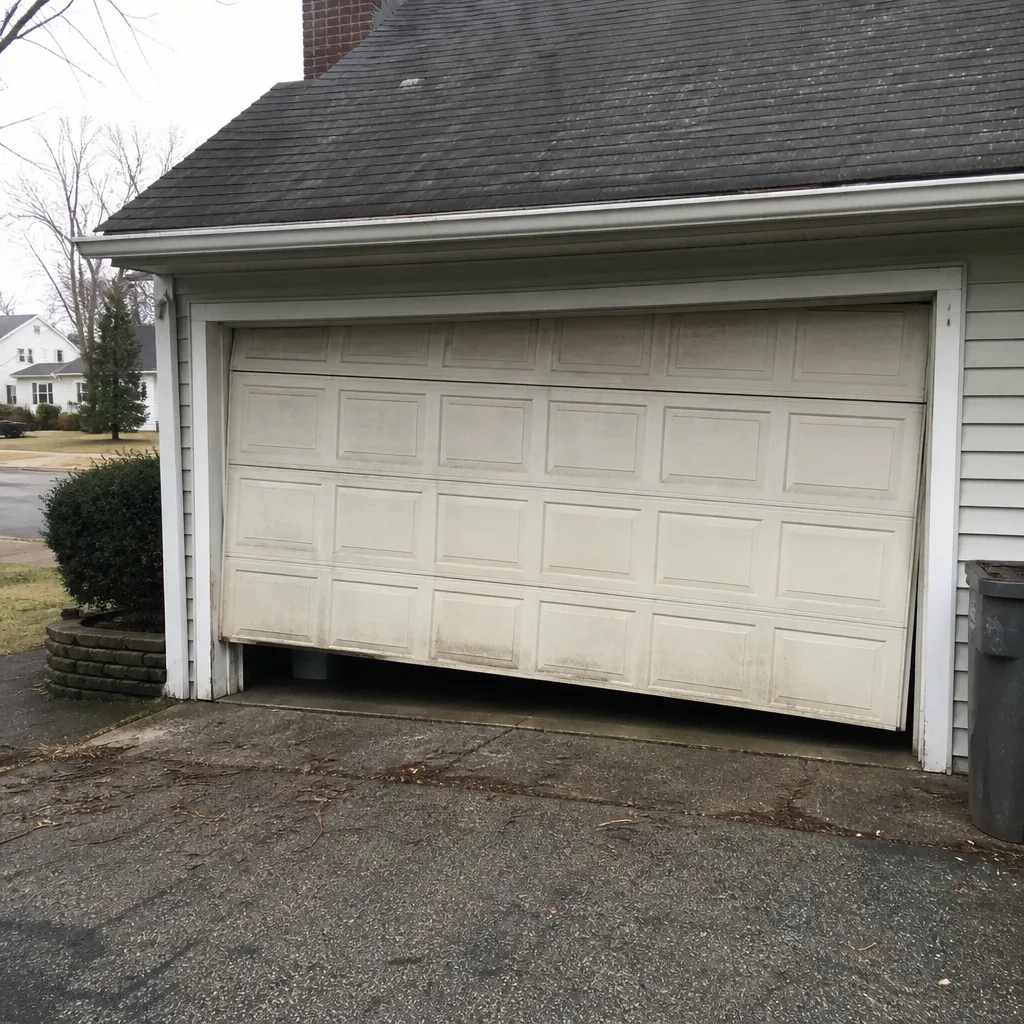 Before
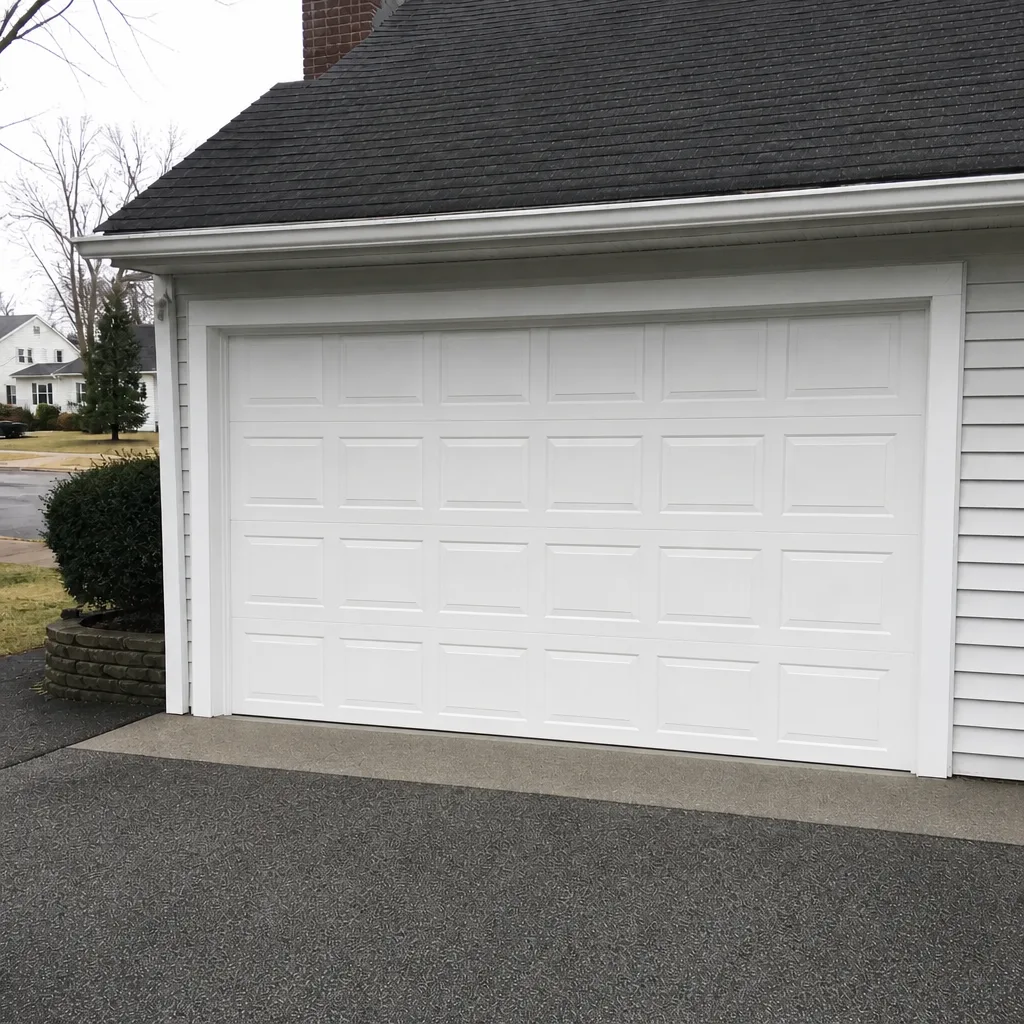 After
When to Call a Professional
There are two categories of garage door work that belong with a specialist. The first is anything involving structural changes, new electrical work, or a permit, because those need the right paperwork and the right liability coverage. The second is anything involving springs and cables. Garage door springs are under high tension and can cause serious injury if handled without the proper tools and technique. We don’t publish step-by-step instructions for spring work for that reason. Same goes for opener circuits; we can diagnose and repair the opener, and where new electrical is needed, coordinate with the licensed professional who files the permit. If your door is stuck open overnight, the opener won’t respond, or a spring has let go, don’t wait for a convenient appointment. Our emergency garage door service is built for exactly those situations. We also handle every major brand we work with, from LiftMaster and Chamberlain openers to Clopay, Amarr, Wayne Dalton, Raynor, and Craftsman doors. Providence Garage Door Repair Pros offers free estimates in Providence; call (833) 981-3384.
Frequently Asked Questions
Usually no, if you’re replacing a door in the same opening with the same size and type and no structural or electrical changes. If the job involves enlarging the opening, changing the header, or running new wiring for an opener, you’ll typically need a permit. Confirm with the Providence building department before the work starts and keep the answer in writing. Call (833) 981-3384 for a free estimate on the door side of the project.
It depends on whether new wiring is involved. If a dedicated outlet already exists above the door and the new opener plugs into it, an electrical permit is usually not required. If a new circuit, outlet, or junction box is needed, the electrical work falls under the electrical permit process. Our technicians can tell you which situation you’re in during a free diagnostic. Call (833) 981-3384.
An inspector typically checks the header and framing if the permit covered structural work, the door’s attachment and operation, both safety reversal features (the photoelectric eyes and the contact reversal), the electrical connections if that work was permitted, and fire separation for attached garages. Springs and cables are maintenance items and are not typically part of a building inspection. If a spring is the problem, that’s a repair call: (833) 981-3384.
Yes, in both cases. Insurers can reduce or deny a claim if damage traces to non-permitted, non-code-compliant work, and buyers in a Providence home sale often ask for documentation of permitted garage door and electrical work. If the paperwork doesn’t exist, you’re typically asked to correct the situation before closing. The cost to correct is usually much higher than the permit would have been. Call us if you need an assessment before a sale at (833) 981-3384.
In most cases, the licensed professional doing the work should pull the permit. When the contractor pulls it, the responsibility for compliance and corrections stays with them, not with you. Ask for proof of insurance and licensing on any permitted job, and confirm before work starts that the final inspection is included in the price. For a free estimate on a Providence project, call (833) 981-3384.
Call and we’ll book you for Sunday. We’re closed on Saturdays, but a door that’s stuck open, a broken spring trapping a car, or an opener that won’t respond is a real problem to solve the next day. Call (833) 981-3384 and we’ll find a time that works.
The Bottom Line
Garage door permits in Providence come down to a single question: does the work touch structure or electrical? If it doesn’t, a straight replacement usually sails through. If it does, the permit is part of the job, not an optional extra. The Rhode Island code that governs residential garage doors covers framing, fire separation, electrical, and opener safety features, and the Providence inspector will check all of them when they apply. The documentation matters more than most homeowners expect, and it matters most at resale and in an insurance claim. Keep the permit, the inspection approval, and the invoice. If you’re not sure which category your project falls into, call and describe the scope. We’ll tell you what we see and whether a permit is likely.
If you’re ready to move forward, or you just want a straight answer before you spend anything, call Providence Garage Door Repair Pros at (833) 981-3384 for a free estimate. We’ll look at your door, your opener, and the scope of work, and give you a written price before anything starts. Whether you need Providence Garage Door Repair Pros help with a stuck door or a full replacement quote, we’ll tell you what’s actually required.
Written by the team at Providence Garage Door Repair Pros.