Last updated November 21, 2026
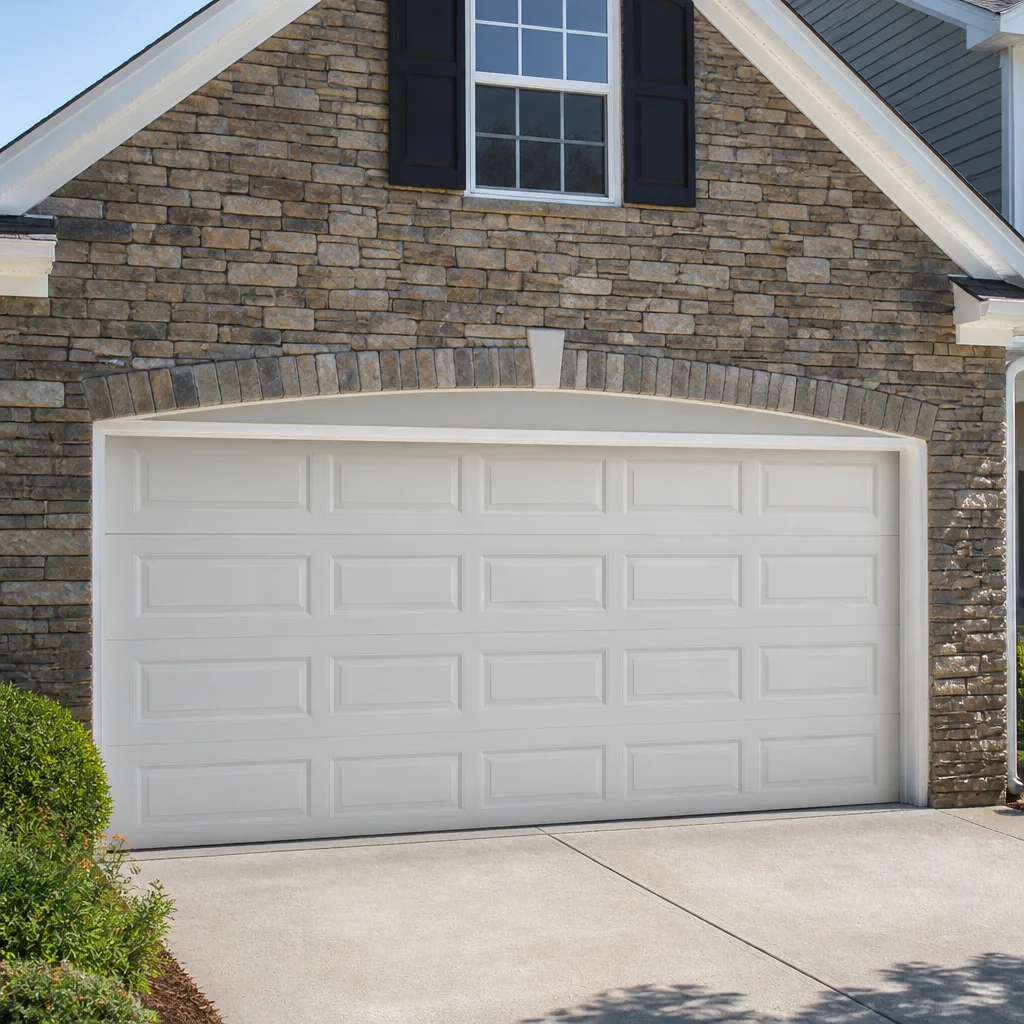 Raised-panel steel
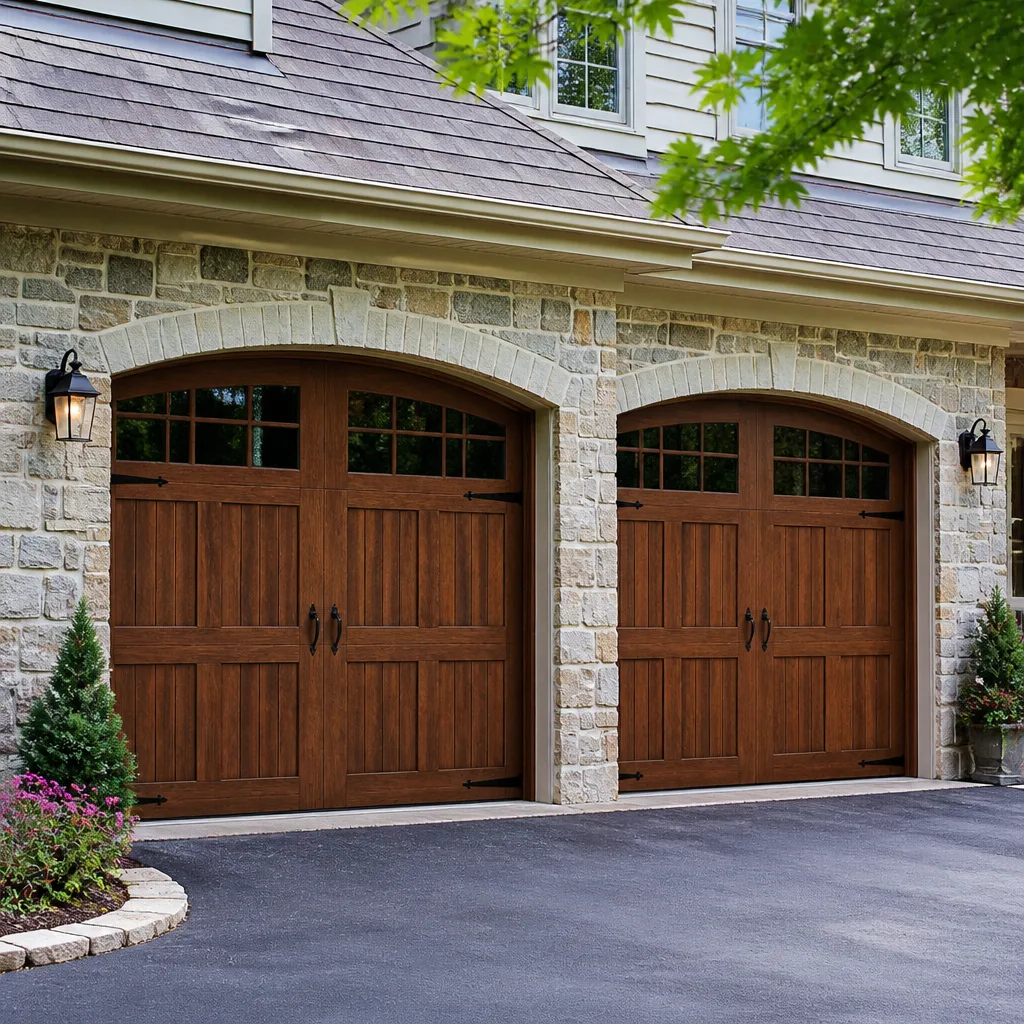 Carriage house
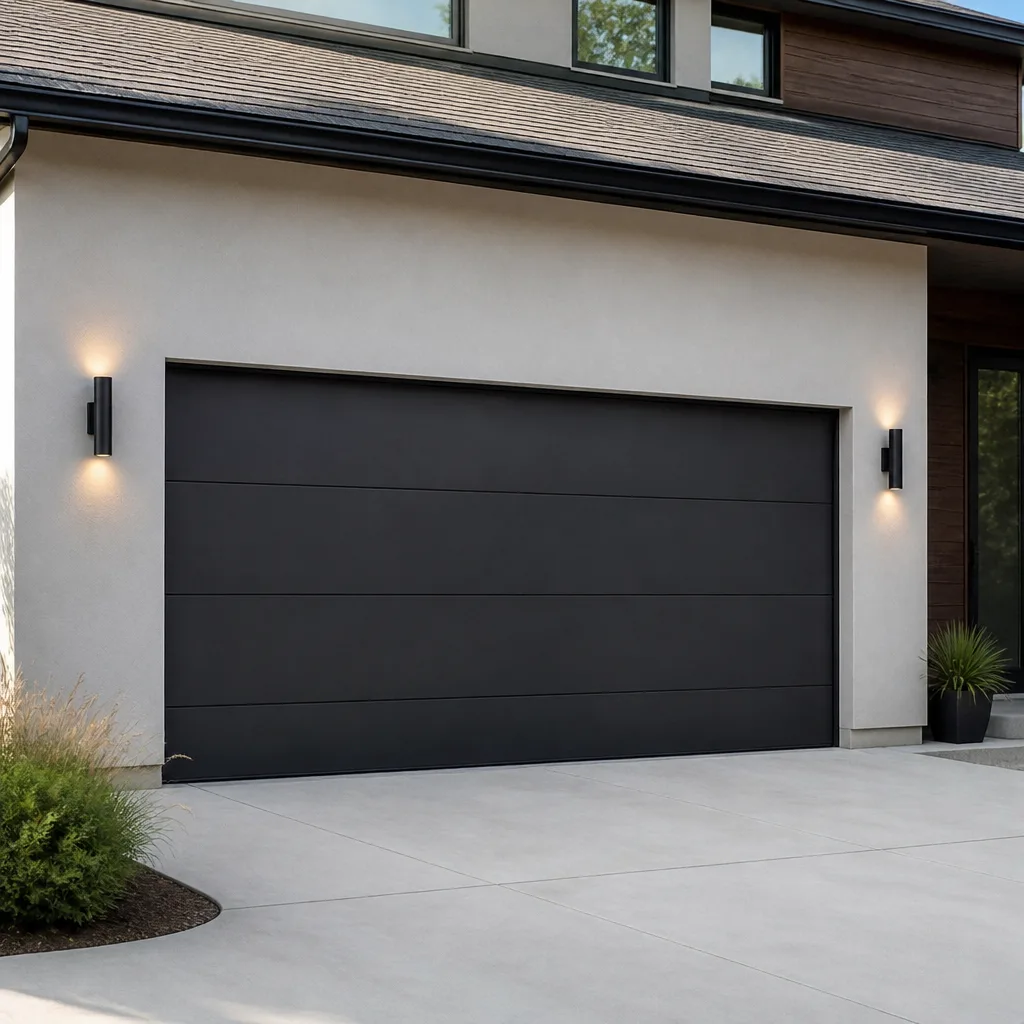 Modern flush
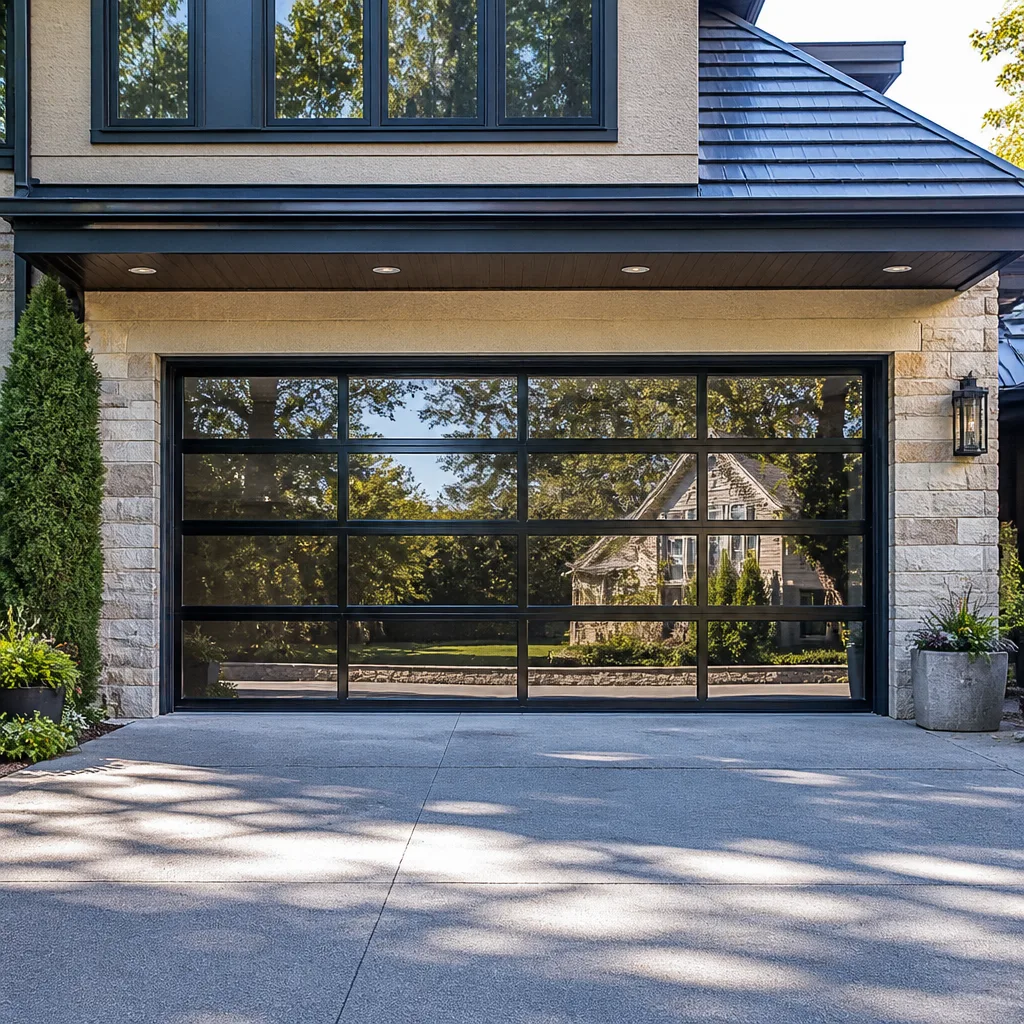 Full-view glass
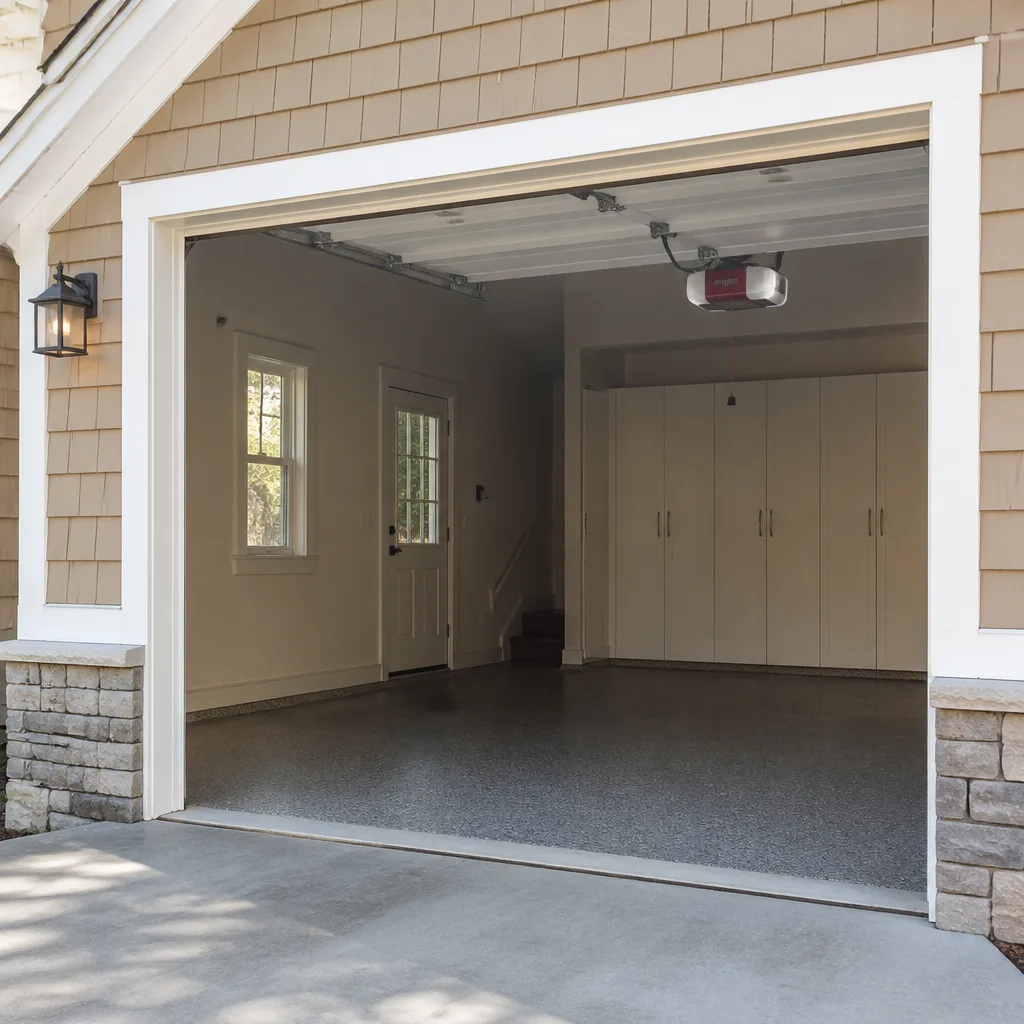 LiftMaster openers
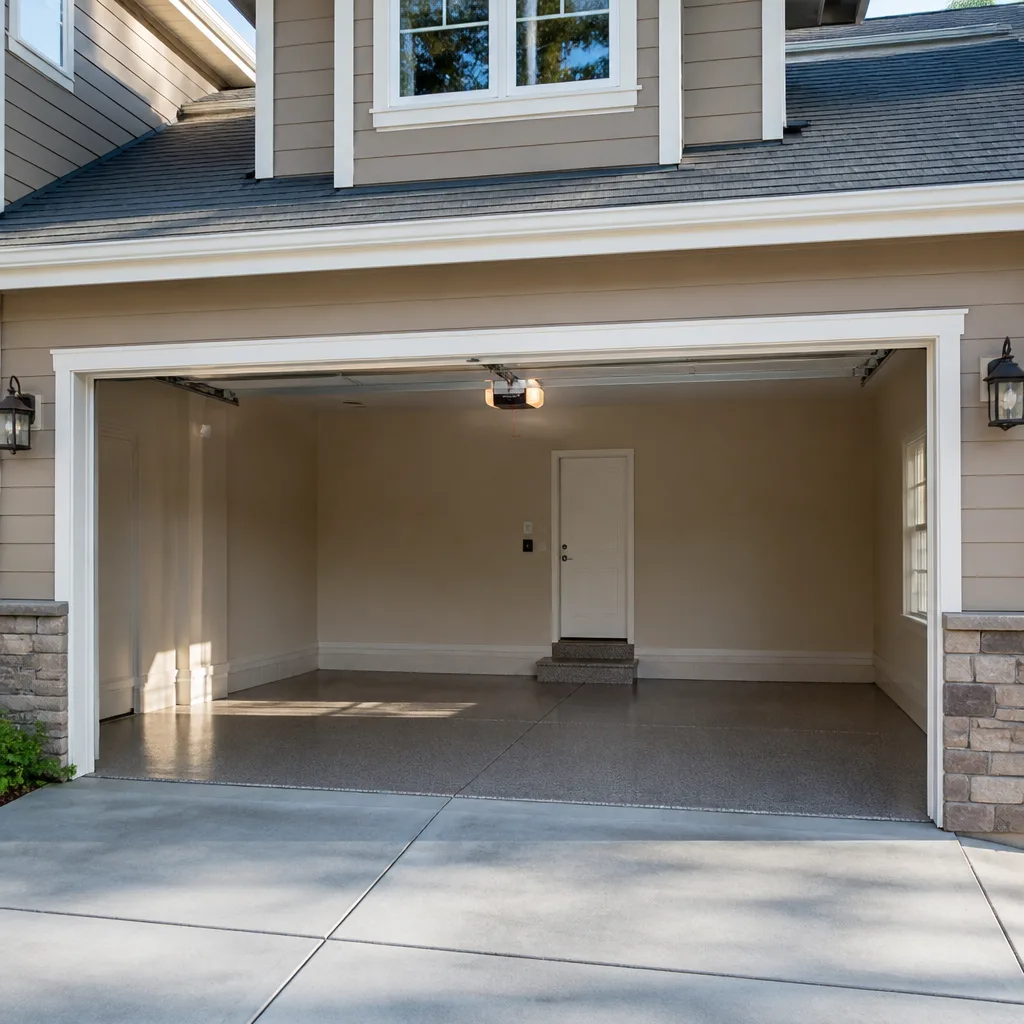 Chamberlain openers
Full 25-point door and opener safety check with every visit - springs, cables, rollers, tracks, and your LiftMaster or Chamberlain opener included
You get a price before we start. It does not change when the pro arrives.
Get your free estimateThe Complete Guide to Garage Doors in Providence
Most garage door advice you’ll find online was written for a subdivision in Arizona where the ground never freezes and the air never holds moisture. Providence is a different story. Between the rain that rolls in off the Bay, the freeze-thaw cycles that crack steel springs, and a housing stock that includes plenty of 1920s triple-deckers sitting next to brand-new East Side construction, the generic playbook falls apart fast.
What works for a garage door in Providence is shaped by the weather, the age of the building, and the way this city’s neighborhoods are laid out. This guide translates the national best practices into decisions that actually make sense for a Providence address. You’ll learn which materials hold up here, how to compare repair against replacement with real local pricing, which openers survive a ten-degree-to-ninety-degree swing, and when to stop tinkering and call someone.
Quick Answer
Garage door work in Providence comes down to matching materials and components to a wet, freeze-thaw climate and an old housing stock. Galvanized or oil-tempered springs, insulated steel or composite panels, and openers rated for cold starts handle this city better than budget components built for dry markets. Most repairs cost a few hundred dollars; a full replacement runs into the low thousands, and a written estimate should always set the final price before any work begins.
Styles & brands we work with
- Raised-panel steel
- Carriage house
- Modern flush
- Full-view glass
- LiftMaster openers
- Chamberlain openers
Table of Contents
- How Providence’s Climate Affects Your Garage Door
- Old Triple-Deckers vs. New East Side Construction
- Springs: Galvanized vs. Oil-Tempered in a Providence Winter
- Choosing an Opener for Providence Temperature Swings
- What Garage Door Work Costs in Providence
- Repair or Replace? A Decision Framework
- Materials That Hold Up in Providence
- A Simple Maintenance Routine for Providence Homeowners
How Providence’s Climate Affects Your Garage Door
Providence gets roughly 48 inches of rain a year, and that moisture is the single biggest driver of premature garage door wear in this city. Water doesn’t just fall on the door and evaporate. It works its way into the seams between panels, collects on the bottom seal, and sits against the steel tracks where the door meets the concrete. Over a season or two, that trapped moisture starts the rust that eventually seizes a roller or pits a panel.
Then winter arrives and adds a second stress: freeze-thaw. Water that seeps into a hairline crack in a panel or the winding cone of a spring freezes overnight, expands, and then thaws the next afternoon. Repeat that cycle through a Rhode Island winter and metal fatigues far faster than it would in a stable climate. This is why the same spring that lasts many years inland can fail sooner in Providence.
There’s also the air itself. Living next to the Bay means the atmosphere carries more humidity and salt than inland Rhode Island, and both accelerate corrosion on anything steel. Springs, hinges, rollers, and tracks all feel it. The practical takeaway:
- Inspect the bottom seal and panel seams for trapped water after heavy rain.
- Wipe down and lubricate steel moving parts more often than a dry-climate guide suggests.
- Watch the bottom section of the door first, since that’s where moisture collects.
- Treat any rust spot on a track or hinge as a warning, not a cosmetic issue.
None of this means a Providence garage door is doomed. It means the maintenance rhythm here is a little tighter than the national average, and the payoff for choosing the right materials is bigger. A door that would coast for years in a dry market needs a bit more attention near the Bay, and a homeowner who understands why is already ahead.
Old Triple-Deckers vs. New East Side Construction
Providence has two very different garage door problems depending on where you live. In the older neighborhoods with 1920s triple-deckers and detached garages tucked behind them, you’re dealing with structures built long before anyone standardized garage door openings. On the East Side and in newer construction, you’re dealing with modern doors that are tighter, heavier, and often connected to smart openers.
Here’s how the two compare:
- Older triple-decker garages: Openings are often nonstandard in width and height. Tracks may be out of square from decades of settling. The framing behind the door can be soft from years of moisture, which affects how a new door is anchored.
- New East Side construction: Tighter tolerances, heavier insulated doors, and a higher chance the opener is a Wi-Fi-connected model from LiftMaster, Chamberlain, or Genie. Repairs here tend to be electronic or sensor-related rather than mechanical.
For an older garage, the priority is measuring accurately and checking the structure before anyone orders a door. A door ordered for a “standard” opening that turns out to be an inch off will not fit, and in Providence’s housing stock that happens more than you’d think. For newer construction, the priority shifts to diagnostics. A door that won’t close on the East Side is more often a misaligned safety sensor or a logic board fault than a broken spring.
If you’re unsure which camp your garage falls into, a professional measure settles it. Our technicians have up to 10 years of experience reading both kinds of buildings, and our garage door installation process starts with checking the opening and framing before anything is ordered. Knowing which problem you actually have is half the battle.
Springs: Galvanized vs. Oil-Tempered in a Providence Winter
This is the decision that matters most in Providence and gets the least attention in generic guides. A torsion spring is a coil of steel under enormous tension, and the steel’s finish decides how long it lasts in this climate. Galvanized springs are coated with zinc to resist corrosion. Oil-tempered springs are bare, heat-treated steel that’s often stronger but more vulnerable to moisture.
In a dry market, oil-tempered wins on raw cycle life. In Providence, where humidity and salt-laden air are constant, galvanized often makes more sense because the coating protects against the corrosion that degrades the spring from the outside in. That said, it’s not a flat rule. A well-ventilated garage that stays drier can do fine with oil-tempered, while a damp garage near the water may punish even a galvanized spring faster than expected.
The spring is also the most dangerous component on the whole door. The tension stored in a wound torsion spring is enough to cause serious injury, and we never recommend that a homeowner try to adjust, release, or replace one. Our spring work is done in-house by specialists with the right winding bars and training, because a snap here isn’t a DIY moment.
When you’re weighing a spring replacement, ask:
- Which spring type is currently on the door, and how is it finished?
- How damp or well-ventilated is the garage?
- Are the other springs likely to fail soon, since matched pairs usually go together?
- Will the new spring be a matched pair or a single spring?
Keep in mind a spring price is for one spring. A matched pair is replaced together, so a pair costs roughly twice a single spring. We’ll always explain which is right for your door rather than defaulting to whatever’s easiest.
Choosing an Opener for Providence Temperature Swings
A garage door opener in Providence has to start reliably when it’s ten degrees in January and again when it’s ninety in July. That swing stresses the motor, the gears, and the electronics far more than a mild climate does. The openers that hold up best here are the ones with a solid cold-start reputation and simple, serviceable mechanics: LiftMaster, Chamberlain, and Genie are the names we see most often, and each handles the swing differently.
Belt-drive openers run quieter and handle cold grease better than chain-drive in many cases, which matters in a neighborhood where garages sit close to living space. Modern Wi-Fi-connected models from these brands add convenience, but they also add a diagnostic layer. When a connected opener misbehaves, the problem could be the motor, the logic board, the safety sensors, or the app itself, and sorting that out takes the right tools.
What we’ve learned from working on both legacy mechanical openers and current smart models: don’t replace a working opener just because a newer one has more features. The repair-first instinct saves money. Diagnose the existing unit first, and only swap it out when the repair cost or the unit’s age genuinely justifies it. Our garage door opener repair work covers the electronics as well as the mechanical side, so you’re not handed off between a door person and an electrician.
What Garage Door Work Costs in Providence
Providence labor and parts pricing sits in a specific band, and it helps to know it before you call. These are typical, estimated ranges for this city’s market, and the written estimate you receive sets the final price. Nothing here is a promise of an exact number, because every door is different.
| Service | Typical estimated range |
|---|---|
| Spring repair or replacement (one spring) | $180 to $340 |
| Matched spring pair replacement | Roughly double the single-spring price |
| Opener repair or diagnostics | $120 to $300 |
| New opener installation | $300 to $600 |
| Panel replacement | $250 to $700 per panel |
| Track and roller service | $150 to $400 |
| Full door replacement | $1,200 to $3,500 |
Two things drive the spread in every one of those rows. The brand and weight of the door matters, since a heavy insulated Clopay or Amarr door takes more to lift and balance than a lightweight basic panel. And in Providence’s older garages, nonstandard openings or soft framing can add labor. A straightforward spring swap on a standard door sits at the low end. A replacement that requires squaring a sagging track or reframing an opening climbs toward the higher end.
The most important number, though, is the one on your written estimate. We quote and agree the price before any work starts, and that price is the price. If we open the door and find something the estimate couldn’t see, we stop and talk it through with you rather than finishing the job and handing over a surprise invoice. For a closer look at repair pricing specifically, see our page on garage door repair.
Repair or Replace? A Decision Framework
Our default instinct is repair first. Plenty of doors that get quoted for replacement only need a spring, a set of rollers, or a sensor realignment. But there are times when repair stops making financial sense, and knowing the line saves you from both overspending on a failing door and replacing one that had years left.
Lean toward repair when:
- A single spring, roller, hinge, or sensor has failed and the rest of the door is sound.
- The opener is repairable and the door itself is in good shape.
- One panel is damaged and a matching replacement is available.
Lean toward replacement when:
- Multiple panels are rusted through or the door is visibly sagging or out of square.
- Repeated repairs are adding up to close to the cost of a new door.
- The door is unsafe: a bent track, a warped panel that binds, or failing hardware throughout.
- You want better insulation or a quieter door and the current one is at the end of its life.
Run the numbers both ways. If repairs over a season or two approach the low end of the replacement range, a new door often makes more sense. If a single repair is well under that line, fix it. A company that always sells replacement is selling you something. We’d rather fix what’s there and tell you honestly when it’s time to stop.
Materials That Hold Up in Providence
Material choice is where a Providence homeowner can save themselves years of trouble. The wet, freeze-thaw climate favors materials that don’t absorb water and resist corrosion. Here’s how the common options stack up in this market:
- Insulated steel: The workhorse choice for most Providence homes. It’s strong, it insulates, and it holds up well if the finish is intact. Watch the bottom section for moisture damage and rust, and keep the paint touched up.
- Composite and wood-alternative panels: These resist moisture and rot better than natural wood and suit the older triple-decker garages where a wood look fits the block. Wayne Dalton makes composite and steel lines that work well here.
- Natural wood: Beautiful on an older East Side home, but it needs real maintenance in this climate. It absorbs moisture, needs sealing, and will not survive neglect the way steel or composite will.
- Aluminum and glass: Striking on modern construction, but the metal needs care near the humidity and the glass panels add weight. Good for a specific look, not the low-maintenance pick.
The bottom line for Providence is to pick a material with a corrosion-resistant finish and a good seal, then keep that finish intact. A cheap door with a thin finish will rust at the bottom and around the seams faster than a better door that’s properly maintained. If you’re replacing, tell the installer about any dampness in the garage so the right grade of door and hardware gets specified.
A Simple Maintenance Routine for Providence Homeowners
A little upkeep goes a long way in this climate, and none of it is complicated. Do these on a regular rhythm and you’ll catch most problems before they become emergency calls:
- Lubricate the moving parts. Rollers, hinges, and the spring coils benefit from a proper garage door lubricant, especially before winter. Skip the tracks themselves, which should stay clean and dry.
- Check the balance. With the door closed and the opener disconnected, lift it partway by hand. A balanced door stays put. One that drops or fights you has a spring or balance problem.
- Test the safety features. Put an object in the door’s path and confirm it reverses. Test the photo-eye sensors by blocking them and checking the door won’t close.
- Inspect for moisture and rust. After heavy rain, look at the bottom seal and panel seams. Wipe away standing water and treat early rust before it spreads.
- Listen. A grinding, squealing, or banging door is telling you something. Note whether the noise comes from the opener, the tracks, or the springs.
Never attempt to adjust or replace the springs or cables yourself. Those parts hold lethal tension and belong to a trained technician. Everything else on that list is safe for a homeowner to check, and it’s the best way to know when to call in help. When something does need attention, our Providence Garage Door Repair Pros team handles the full life cycle, from diagnostics to emergency response, so you’re not bouncing between specialists.
Common Mistakes to Avoid
- Buying a budget door built for a dry market. A thin-finish door that’s fine in Arizona will rust at the seams and bottom section after a couple of damp Providence seasons.
- Ignoring a single broken spring. The second spring on a matched pair usually fails soon after the first, so replacing one and waiting for the other often means paying for two visits.
- Greasing the tracks. Lubricant belongs on rollers, hinges, and springs, not the tracks, where grease attracts grit and gums up the rollers.
- Assuming a door that won’t close is broken. In newer East Side construction it’s often a misaligned safety sensor, not a mechanical failure. Check the sensors before assuming the worst.
- Replacing an opener because it seems “old.” A working opener from LiftMaster, Chamberlain, or Genie with a repairable fault doesn’t need replacing. Diagnose first.
- Ordering a door before measuring an older garage. Triple-decker garages often have nonstandard openings, and a door ordered to a “standard” size won’t fit.
- Trying to adjust a spring. This is the mistake that sends people to the hospital. Springs and cables are a professional job, every time.
See the difference
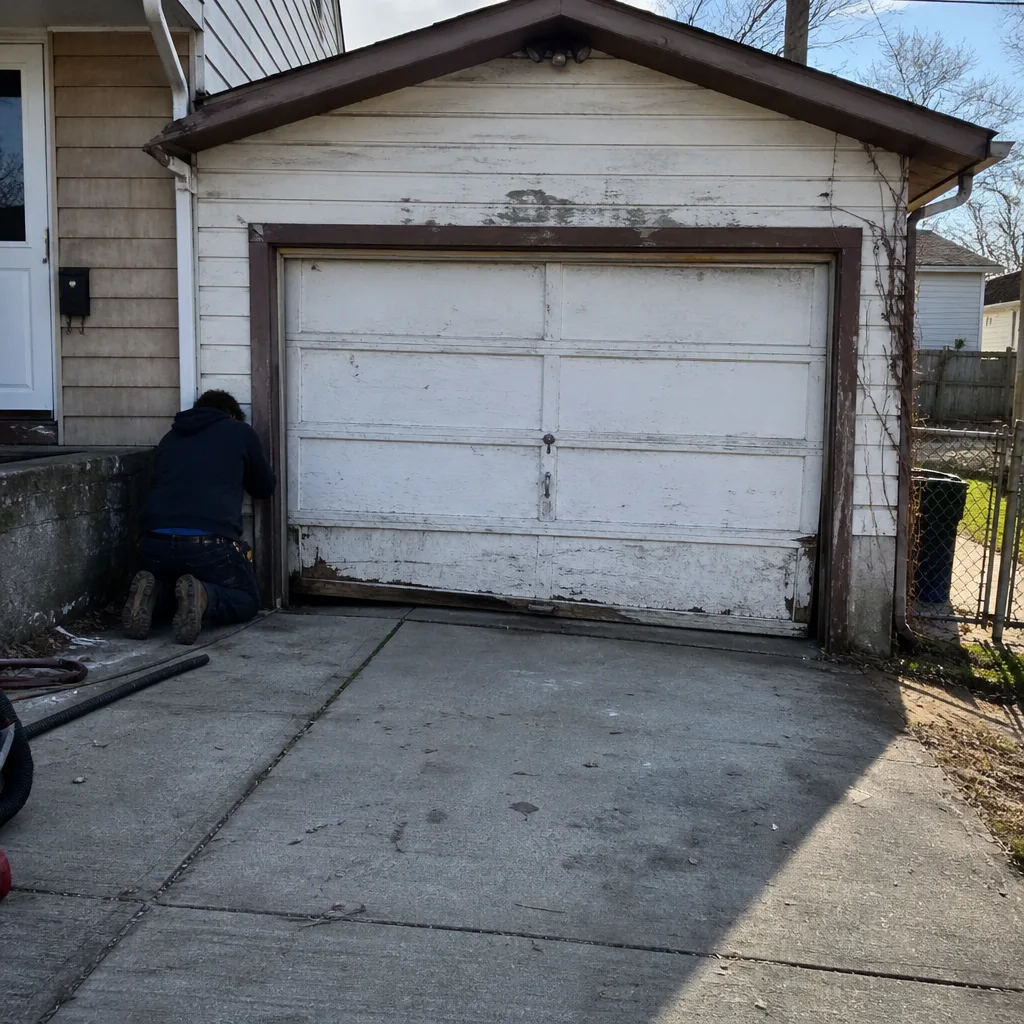 Before
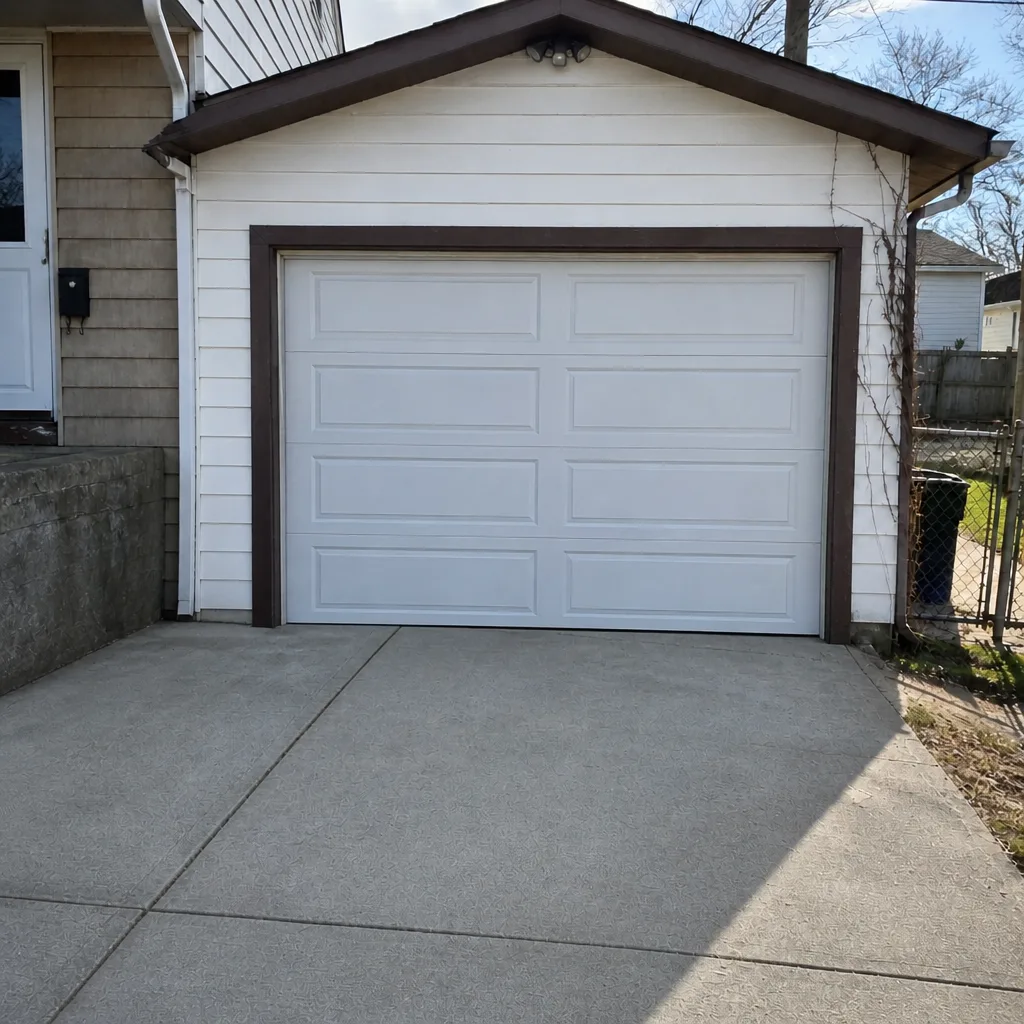 After
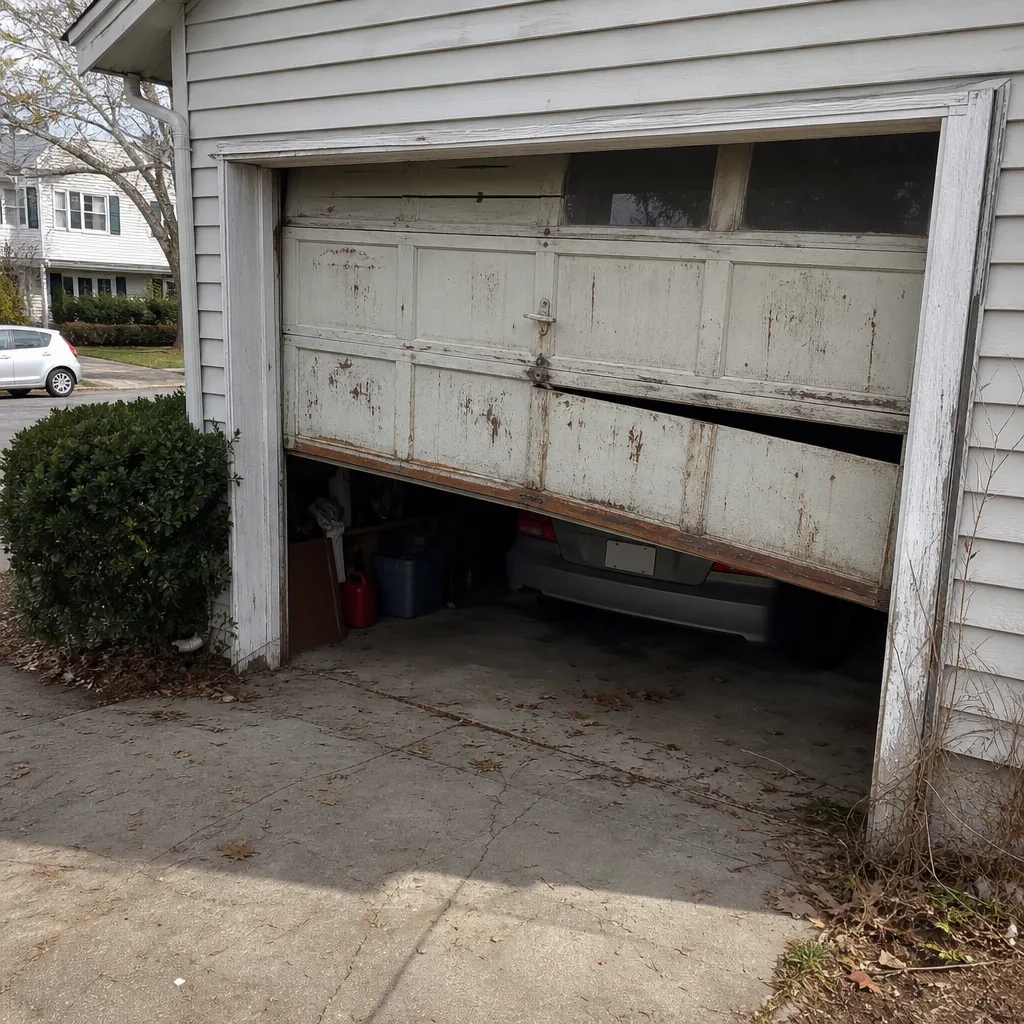 Before
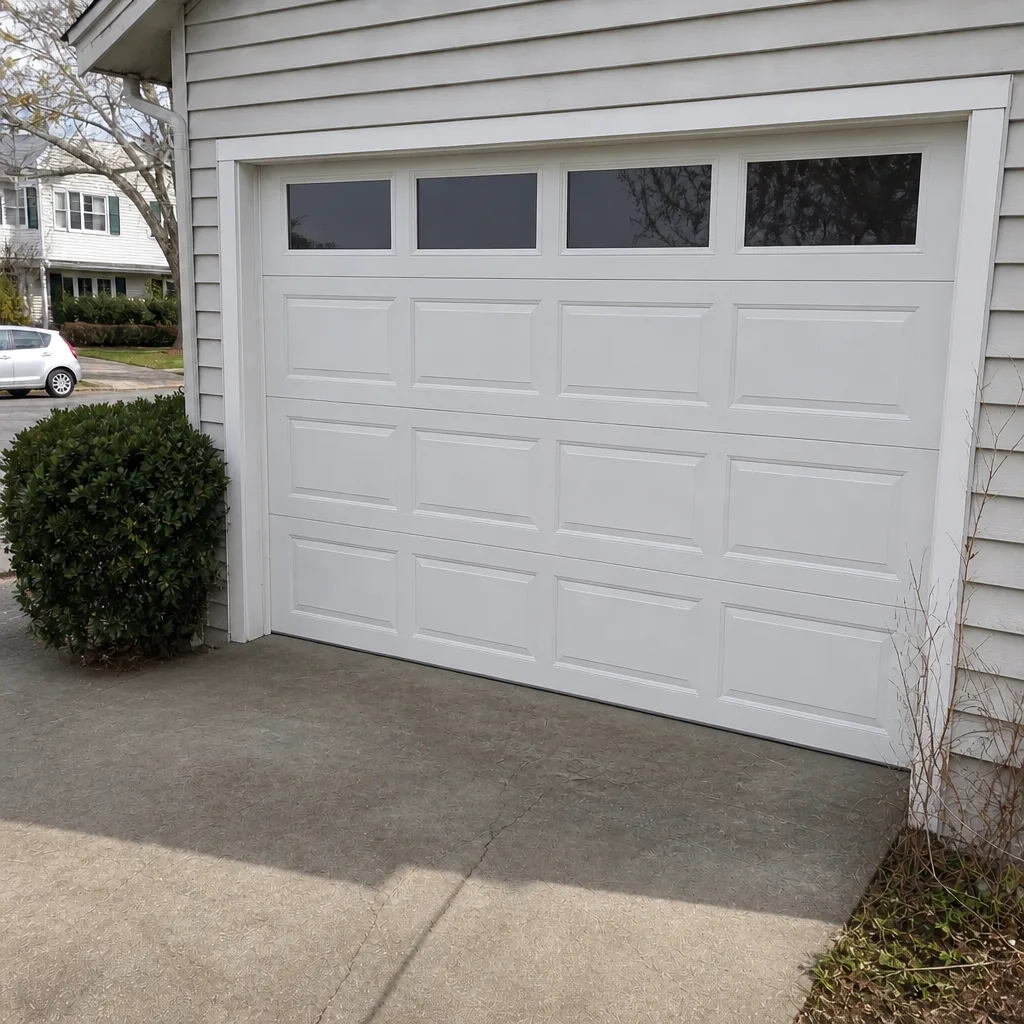 After
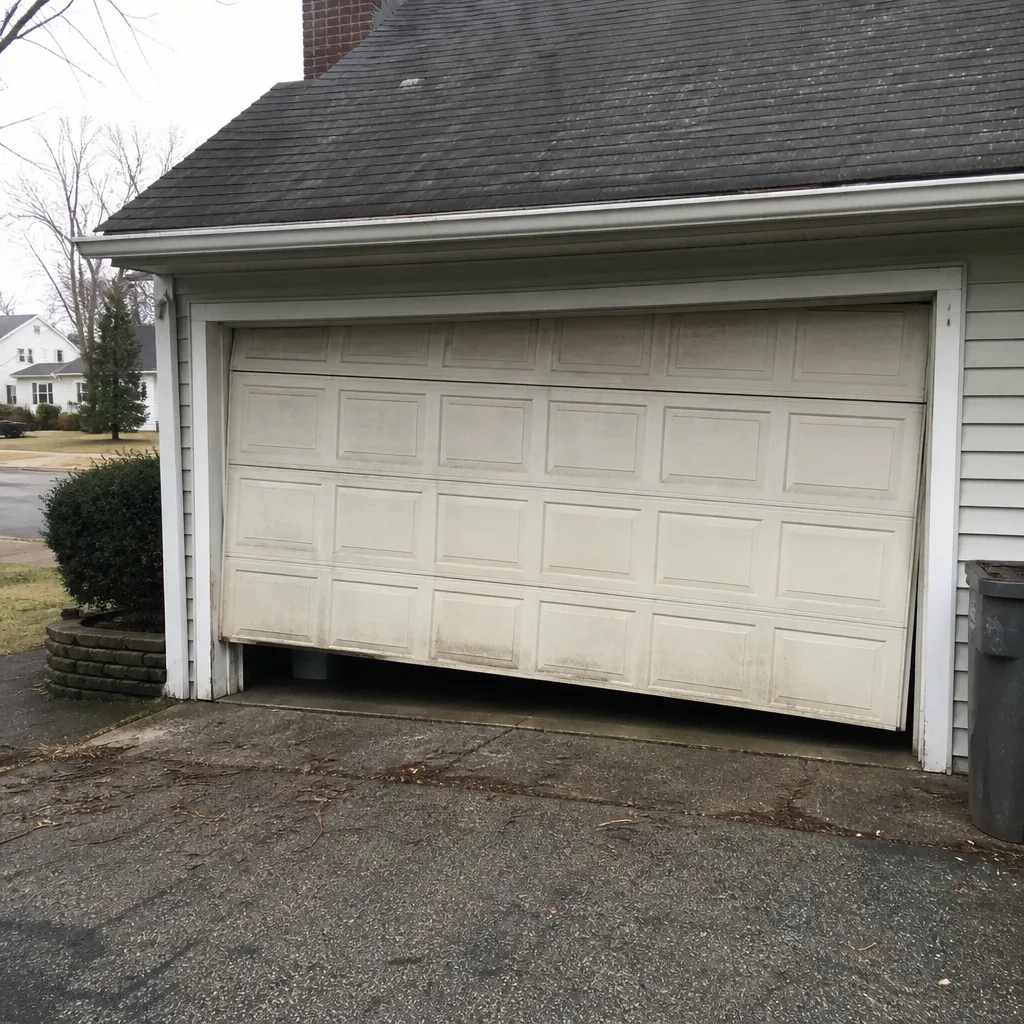 Before
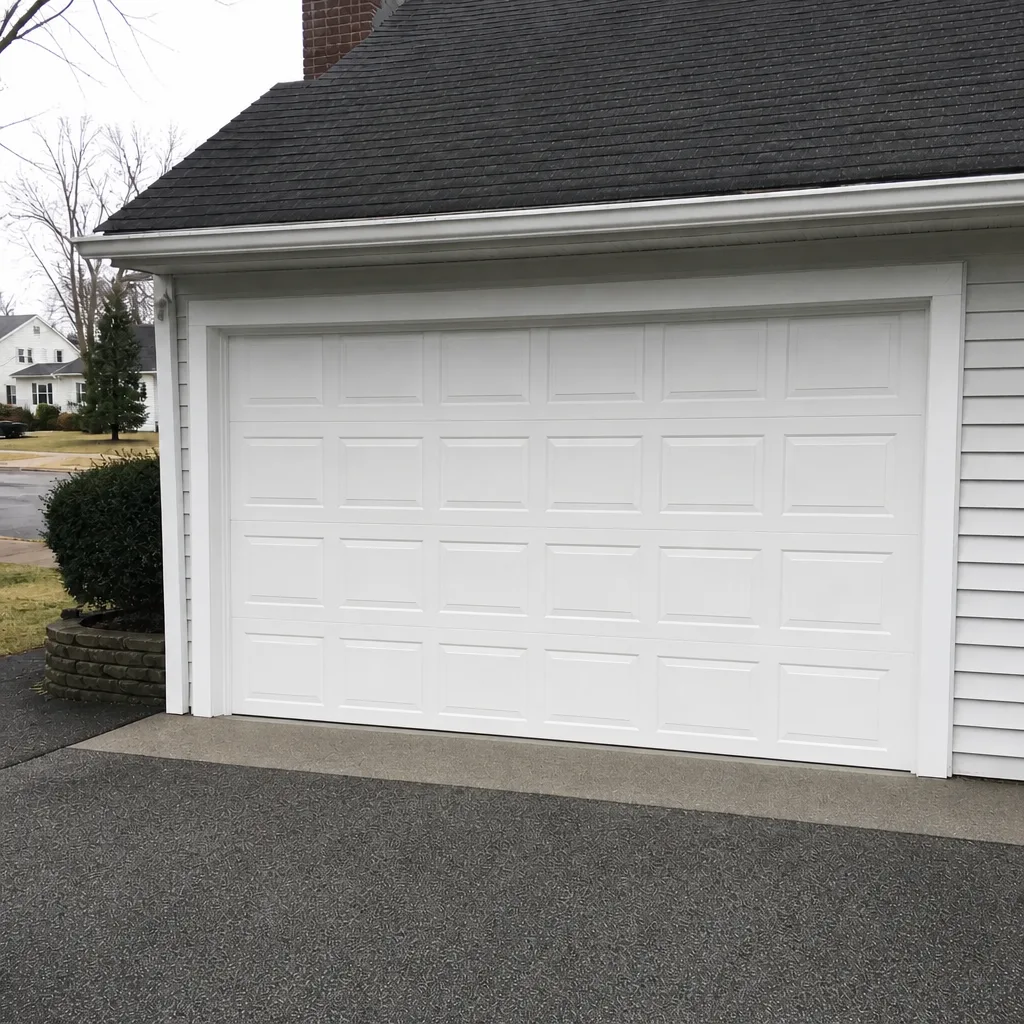 After
When to Call a Professional
Some jobs are safe to handle yourself and some aren’t. Call a professional the moment you’re dealing with a broken or unbalanced spring, a snapped cable, a door that’s come off its track, or a door that’s stuck open and leaving the house exposed. A door that won’t close and won’t reverse is a safety issue that shouldn’t wait, and a heavy door hanging on a bent track can fall. Electrical faults inside a smart opener, a door that binds and reverses repeatedly, and any repair you can’t diagnose with confidence all belong to a trained technician.
Providence Garage Door Repair Pros offers free estimates in Providence. Emergency garage door service is a real availability commitment for us, not a callback promise, so if your door fails and it can’t wait, call (833) 981-3384. Our technicians have up to 10 years of experience across LiftMaster, Chamberlain, Genie, Clopay, Amarr, Wayne Dalton, Craftsman, and Raynor equipment, and the price is quoted and agreed before any work begins.
Frequently Asked Questions
Spring repair in Providence typically runs $180 to $340 for one spring, and a matched pair is replaced together so it costs roughly double that. The written estimate you receive sets the final price, and we quote it before any work starts. Call (833) 981-3384 for an exact quote, since estimates are free.
Yes, emergency garage door service is a core offering for us, not an upsell, so a door that’s stuck open or trapping a car gets a real same-day response. Call (833) 981-3384 and we’ll get you scheduled as fast as possible. If it fails on a Saturday, call and we’ll book you for Sunday, since we’re closed on Saturdays.
No. We quote and agree the price before any work begins, and that estimate is the price. If we find something the estimate couldn’t anticipate, we stop and talk it through with you first rather than finishing the job and surprising you with the bill. Call (833) 981-3384 to get started.
The local professionals we connect you with are licensed and insured as their state requires, so you’re covered on the job. Our technicians have up to 10 years of experience and handle springs, openers, panels, and emergency calls in-house. Call (833) 981-3384 for a free estimate.
Galvanized springs usually hold up better in Providence because the zinc coating resists the humidity and salt-laden air near the Bay, though a well-ventilated dry garage can do fine with oil-tempered. The right choice depends on how damp your garage runs. Call (833) 981-3384 and we’ll recommend the right spring for your door.
Most cities require a permit for a structural change like a door replacement, but the rule varies, so ask Providence’s building department to confirm what your job requires. We can walk you through what the work involves. Call (833) 981-3384 for a free estimate and we’ll help you sort out the details.
The Bottom Line
Providence is not an Arizona suburb, and garage door decisions here should reflect that. The rain, the freeze-thaw cycles, and the salt-laden air near the Bay put real stress on springs, tracks, and panels, which makes material choice and maintenance more consequential than in a dry market. Older triple-decker garages and newer East Side construction need different approaches, galvanized springs often beat oil-tempered in this climate, and openers that start reliably across a ten-to-ninety-degree swing are worth choosing carefully. Repair first, replace only when the math says so, and always get the written estimate before work begins. That’s the Providence playbook.
Whatever brand you have, we know it. Whether you’re weighing a repair against a replacement or standing in a garage with a snapped spring right now, Providence Garage Door Repair Pros can help. Call (833) 981-3384 for a free estimate, and we’ll give you a straight answer on what your door actually needs.
Written by the team at Providence Garage Door Repair Pros.